In this article
Key Takeaways
- Channel letters give a dimensional, individual-letter look; lightboxes suit complex gradients and replaceable faces.
- Size letters by the 25 ft per inch rule and check stroke, spacing and viewing conditions, not just height.
- Match mounting to site and rules: direct mount is cleanest, a raceway is often fastest, and a backer panel can help with permits.
- Check aluminum returns, acrylic faces and brand-name drivers, and approve the Digital Proof and drawings before production.
Lightbox signs and channel letters solve different storefront branding needs. The right choice depends on your artwork, site, mounting method and budget—not simply which style looks brighter in a photo.
Quick Answer for Busy Store Owners
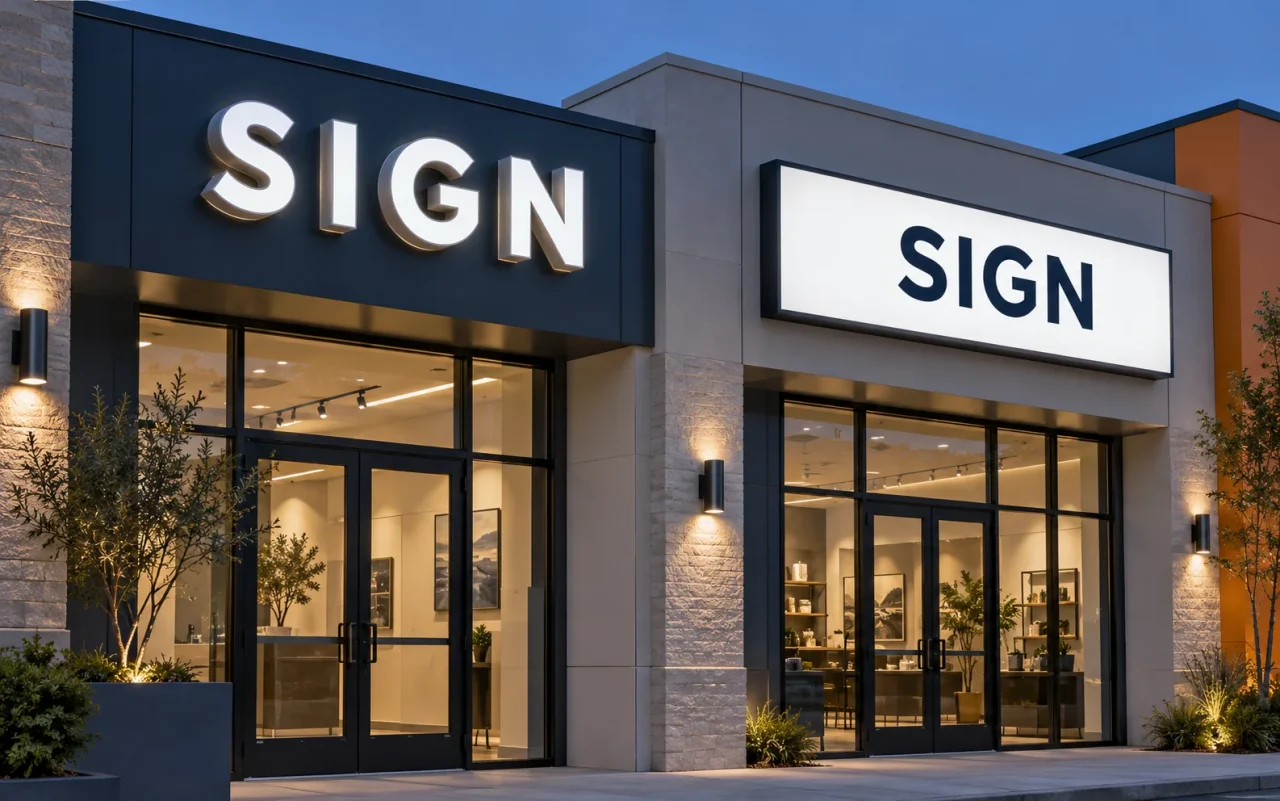
Choose 3D LED Channel Letters if you want a high-end dimensional look and a clear, individual-letter identity on your storefront. Choose an Illuminated Lightbox if your artwork includes complex color gradients, detailed graphics or a face you expect to replace later. Cost, visibility and suitability depend on the actual size, lighting system, mounting conditions and local sign rules; compare like-for-like quotes before deciding.
1. Lightbox Signs vs. Channel Letters: How Are They Built?
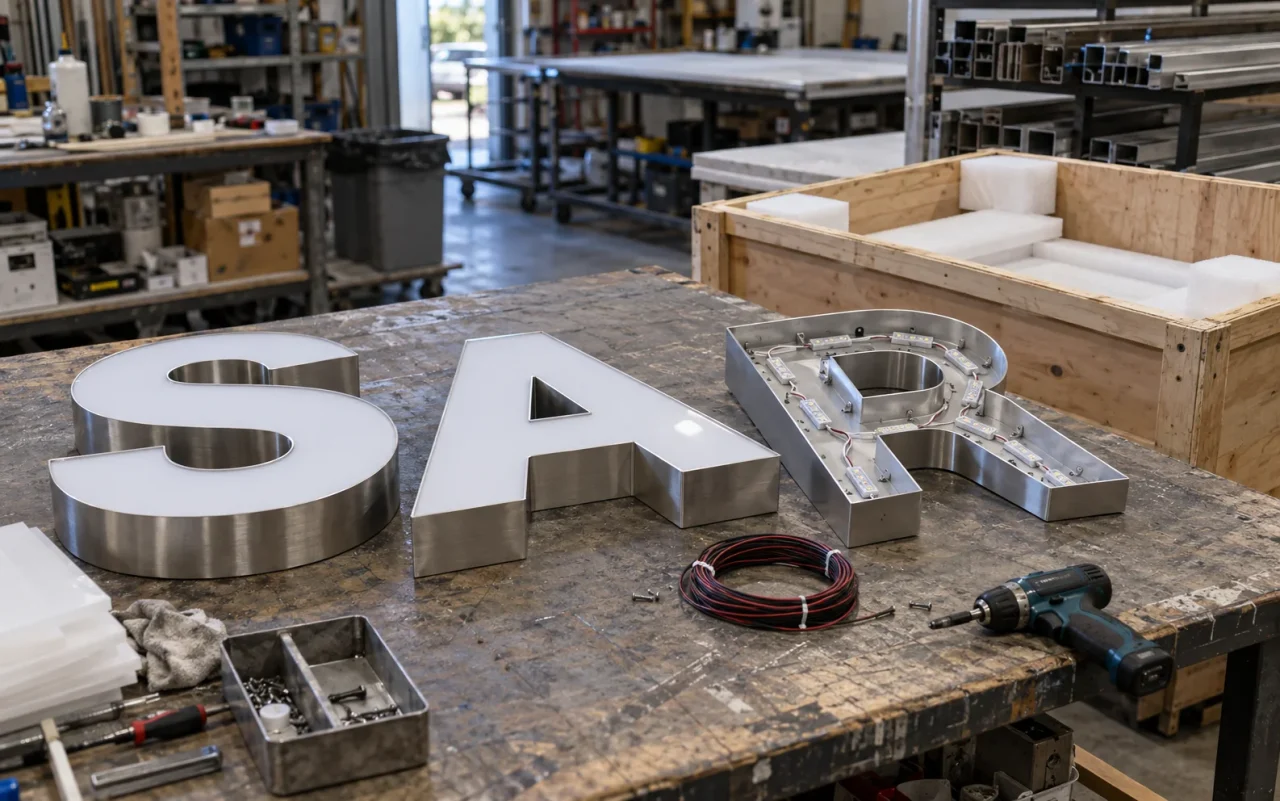
- 3D Channel Letters: Each letter, number or logo mark is an individual metal/acrylic shell that houses its own LED modules. The selected construction and lighting components are specified for your project.
- Front-Lit Letters: Light shines forward through a translucent acrylic face, creating bright, clearly defined lettering. Letter size, contrast and positioning still determine how easily drivers can read it.
- Halo-Lit (Reverse-Lit) Letters: Solid metal faces are mounted away from the wall on standoffs so light glows against the surface behind them. The required stand-off distance depends on the letter construction, LEDs and wall finish; a textured or dark wall changes the effect.
- Illuminated Lightbox Signs: An aluminum cabinet or frame holds a lighting system behind an acrylic face, flexible sign face or Silicone Edge Graphic (SEG) fabric. Outdoor cabinets need an appropriate weather-rated construction. An indoor SEG frame is not automatically suitable for outdoor exposure.
2. Practical Sizing Rule: How Tall Should Your Storefront Letters Be?
Do not guess your sign dimensions. The International Sign Association uses a preliminary guideline of at least 1 inch of letter height for each 25 feet of viewing distance. Treat that as a starting point, not a visibility guarantee: decorative fonts, low contrast, angled viewing, obstructions and moving traffic can require substantially larger letters. The table below shows the arithmetic behind that guideline; check the actual approach to your storefront and local sign limits before ordering.
| Letter Height | Preliminary Distance at 25 ft per Inch | Planning Considerations |
|---|---|---|
| 6–8 in (15–20 cm) | 150–200 ft (46–61 m) | Check actual letterforms, contrast and indoor or pedestrian viewing conditions. |
| 12–15 in (30–38 cm) | 300–375 ft (91–114 m) | Check street approach, obstructions and the time available to read. |
| 18–24 in (45–60 cm) | 450–600 ft (137–183 m) | Moving traffic and an angled facade may require larger lettering. |
| 30–36 in (76–91 cm) | 750–900 ft (229–274 m) | Treat as a preliminary calculation; confirm site and permitted dimensions. |
Engineering Note: Our initial artwork guideline for 3D illuminated letters is a minimum stroke width of 0.6 inches (15 mm). The final minimum depends on the letter depth, fabrication method and selected LED module. Our engineering review confirms whether a particular stroke can be made and illuminated evenly.
Discover products
3. Real-World Installation: How Do You Mount and Wire It Locally?
The #1 concern when ordering factory-direct signage is: “How do I install and wire it when the crate arrives?” At SignCrisp, we provide project-specific mounting information and labeled components to help your local installer plan the job. Wall construction, access, electrical connections and local requirements must still be checked on site.
- Option A: Direct Mount (With a 1:1 Paper Drilling Template): For an individually mounted letter set, we supply a full-size positioning template showing the approved fixing and cable positions. Your qualified installer checks the wall, chooses suitable anchors and confirms hidden services before drilling. The labeled low-voltage leads connect to the specified power supply according to the supplied diagram; final mounting and mains wiring follow the approved installation method.
- Option B: Backer Panel or Raceway Mount (Fewer Separate Fixing Points): If your landlord restricts drilling many holes into the facade, letters can be pre-mounted and pre-wired on a backer panel or raceway. This can simplify the site work, but the number and type of anchors depend on the assembly weight, wind loading and substrate. Glass mounting requires a specifically approved system rather than a standard wall-mount assumption.
- Voltage and Compliance: We specify brand-name drivers, such as Mean Well where quoted, for the project’s supply voltage and environment. Check the model’s input range and installation instructions: some power supplies accept a wide input range automatically, while others use a voltage-selection switch. Component certification or compliance documentation does not by itself certify the complete sign. Your installer must verify the finished sign’s required approvals and the local electrical installation.
4. Side-by-Side Comparison: Channel Letters vs. Lightbox
| Decision Factor | 3D Illuminated Channel Letters | Commercial Lightbox / Cabinet Sign |
|---|---|---|
| Upfront Fabrication Cost | Separate forming, assembly and wiring for each character can add fabrication work. | A single cabinet can be more economical for some designs; compare matching sizes and specifications. |
| Best Logo Style | Clear lettermarks and icons with strokes that suit the chosen construction. | Detailed graphics, gradients and imagery that suit the selected sign face. |
| Landlord / Permit Approval | Subject to lease rules, sign code and project approval. | Subject to the same site-specific approval process; some locations restrict cabinets. |
| Future Rebranding | Changes may require replacement letters and altered fixing positions. | A replaceable face can simplify updates, provided access and frame compatibility are suitable. |
5. Frequently Asked Questions
Do you provide shop drawings for my landlord or city permit?
Yes. Before fabrication begins, our engineering team sends a Digital Proof and project specifications showing dimensions, mounting details, LED wattage and power-supply information. These help your property manager and installer review the sign. A city or landlord may require additional documentation, a locally licensed professional or a stamped drawing; approval is not automatic.
Ready to price your storefront sign? Email your logo and wall photo to hello@signcrisp.com or request a factory-direct quote on our Contact Page. Explore more options on our Custom Signs Page.