In this article
When ordering custom channel letters, how they attach to the facade matters almost as much as the letters themselves. Your mounting method dictates the finished architectural look, the number of holes drilled into your building wall, where power supplies and wiring are housed, and how easily the sign can be serviced years later. Choosing the wrong mount after fabrication has started can put you at odds with your landlord, your wall material, or your lighting design.
1. The two mounts in 30 seconds
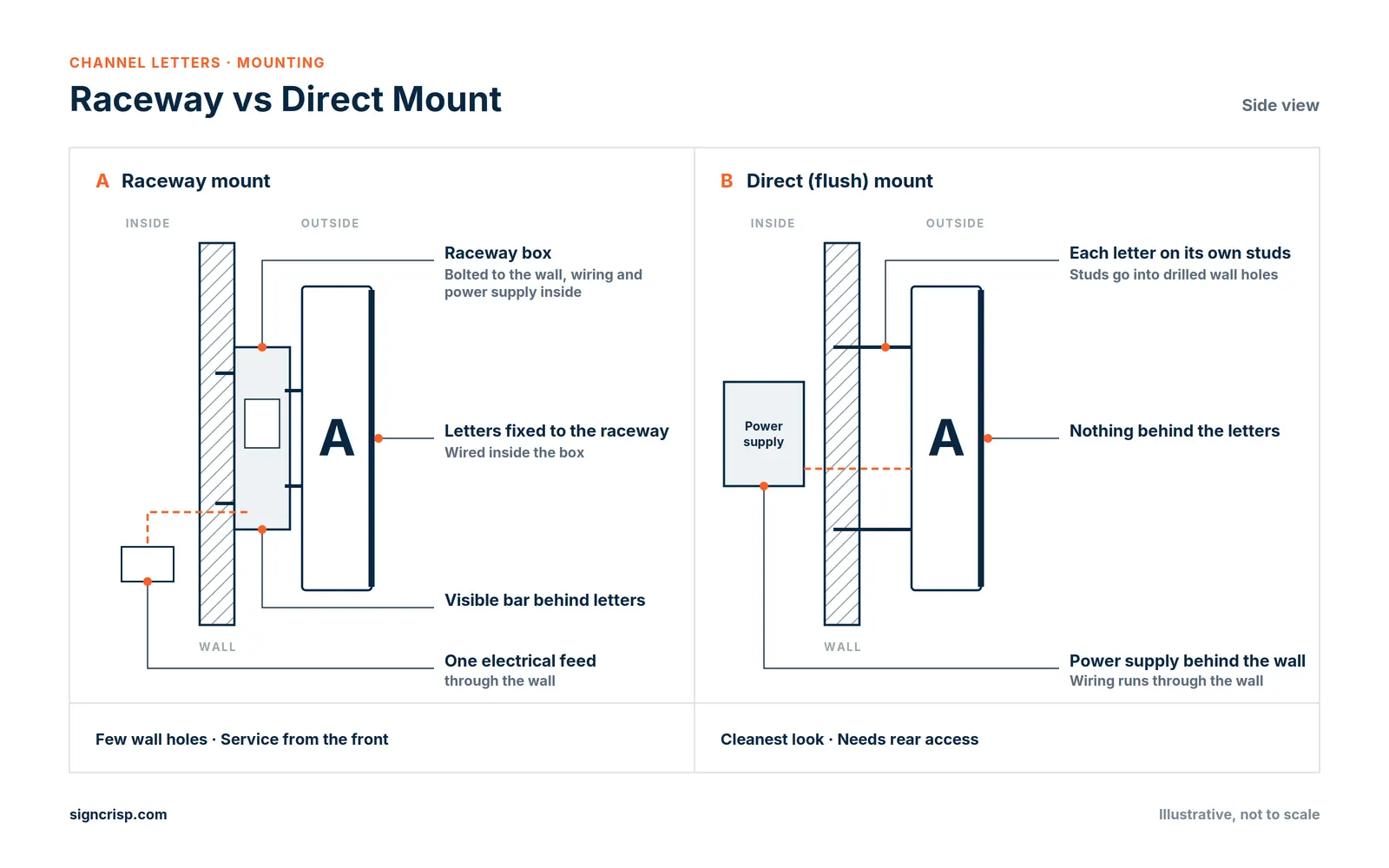
- Raceway mount: Letters are pre-mounted at the factory onto a long, narrow aluminum enclosure—the raceway—which is then bolted to the building wall. Low-voltage wiring and LED power supplies (transformers) sit inside the raceway box, requiring only one primary electrical feed through the wall. Even when painted to match the brick or stucco, the raceway remains visible as a horizontal bar behind the letters.
- Direct mount (flush mount or stud mount): Each letter is fastened individually to the facade using threaded studs and standoffs. Each letter’s low-voltage lead passes through a drilled hole to power supplies mounted behind the wall. With no backing bar, the letters appear to grow cleanly out of the architecture.
| Factor | Raceway mount | Direct mount (Flush / Stud mount) |
|---|---|---|
| Appearance | Painted aluminum bar visible behind letters | Cleanest architectural look; nothing behind letters |
| Wall penetrations | Minimal — mounting bolts + 1 primary electrical feed | High — multiple stud holes + 1 wire hole per letter |
| Power supplies | Housed inside the raceway box | Installed behind the exterior wall |
| Rear wall access | Not required; serviced from the front | Required for initial wiring and future maintenance |
| Halo-lit suitability | Poor — narrow raceway interrupts the rear LED glow | Ideal — unobstructed wall reflects the halo evenly |
| Removal & repair | Entire sign unbolts as a single unit | Each letter removed and patched individually |
| Cost structure | Higher factory fabrication cost, lower on-site labor | Lower sign hardware cost, higher on-site drilling/electrical labor |
2. Raceway mount: when it is the right call
A raceway is the practical engineering choice when the building wall or lease restricts drilling. Hard masonry, stone, tiled facades, and certain EIFS/stucco assemblies are expensive or risky to drill dozens of times—and commercial landlords frequently prohibit individual letter penetrations to prevent water intrusion.
It is also the best solution when there is no access behind the wall. If the interior ceiling or wall is sealed, occupied by another tenant, or structurally inaccessible, housing the LED power supplies inside the raceway keeps the entire sign serviceable from a ladder or bucket truck outside.
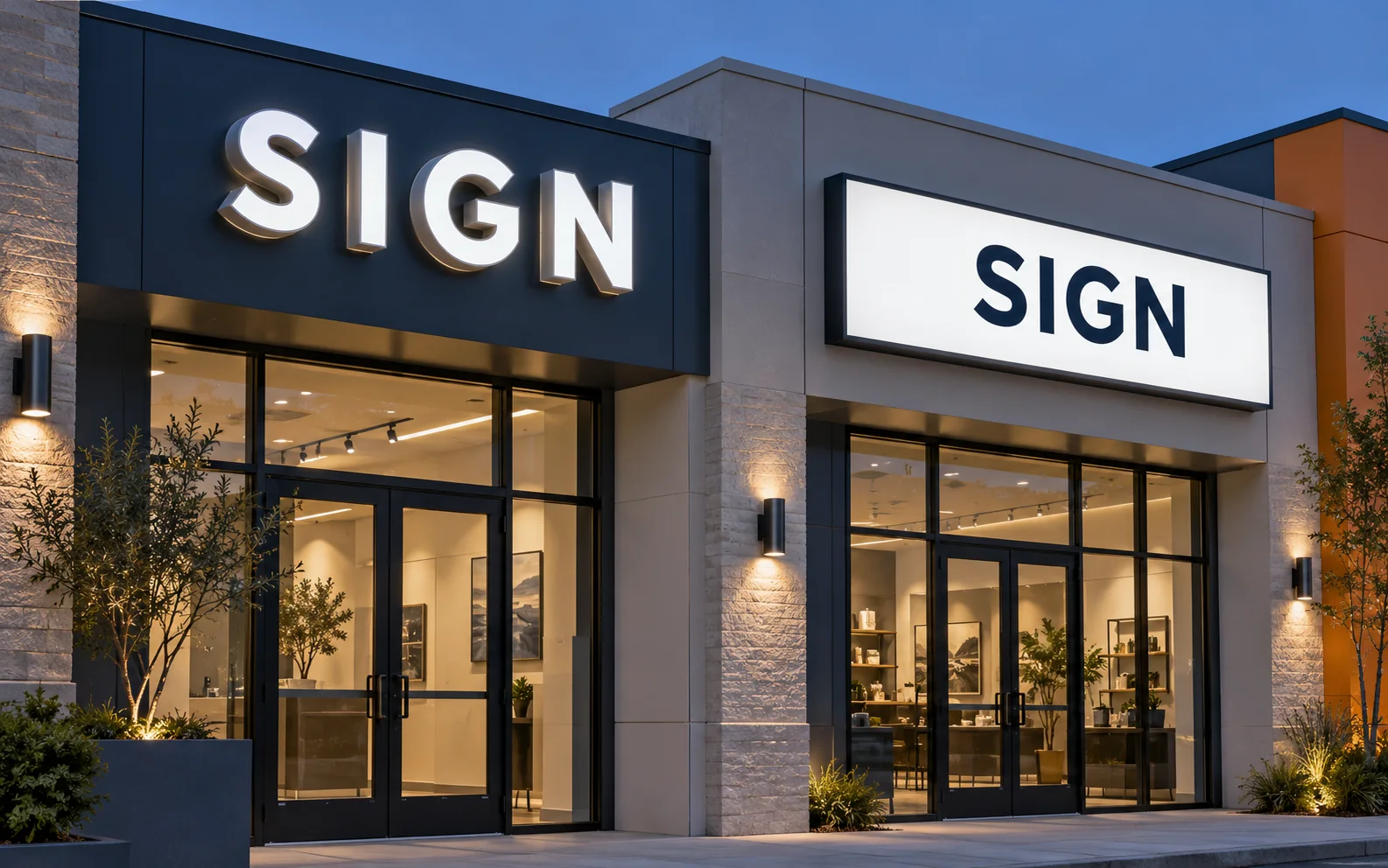
Many shopping centers and multi-tenant plazas mandate raceway mounting in their tenant sign criteria, often specifying maximum projection and exact paint codes. For front-lit channel letters, a color-matched raceway blends in well; however, for halo-lit letters, a narrow raceway blocks the rear light spread—making a backer panel the better choice.
3. Direct mount: when it is the right call
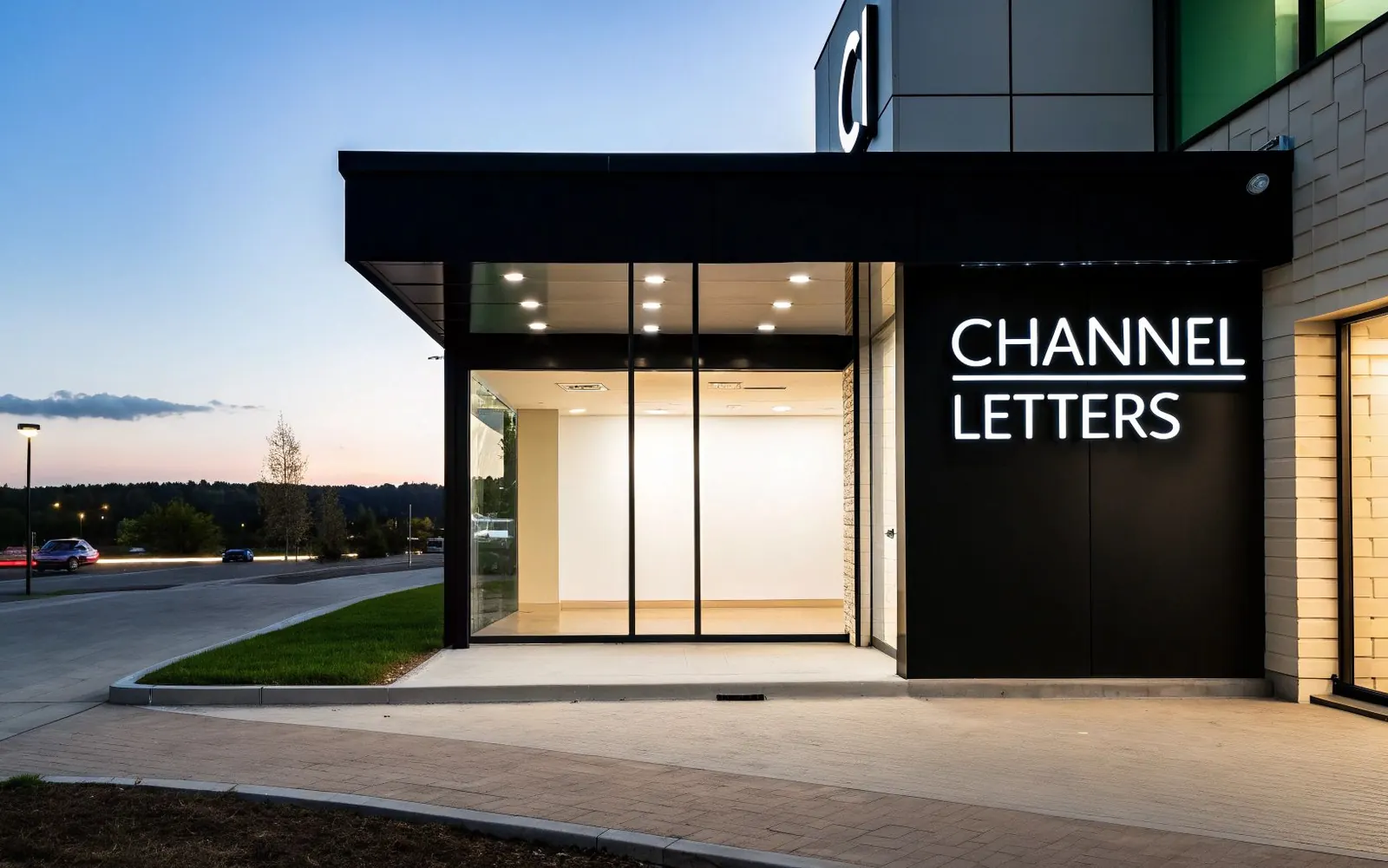
Direct stud mounting is the premier choice when visual minimalism comes first and the building structure allows it. With no horizontal bar behind the typography, each letter casts a clean shadow and integrates seamlessly into high-end retail storefronts and corporate facades.
Direct mounting is also the natural partner for halo-lit (reverse-lit) channel letters. Halo lighting relies on an open, uninterrupted wall surface behind each letter to diffuse the LED glow. SignCrisp engineers review your wall color and texture during proofing because a smooth, matte light-colored facade reflects halo illumination crisply, whereas dark brick or deep mortar joints absorb light.
To use direct mounting successfully, your installer must have reliable access behind the facade to connect the low-voltage wiring and mount the power supplies in a dry, accessible location for future servicing.
4. The third option: backer panel mount
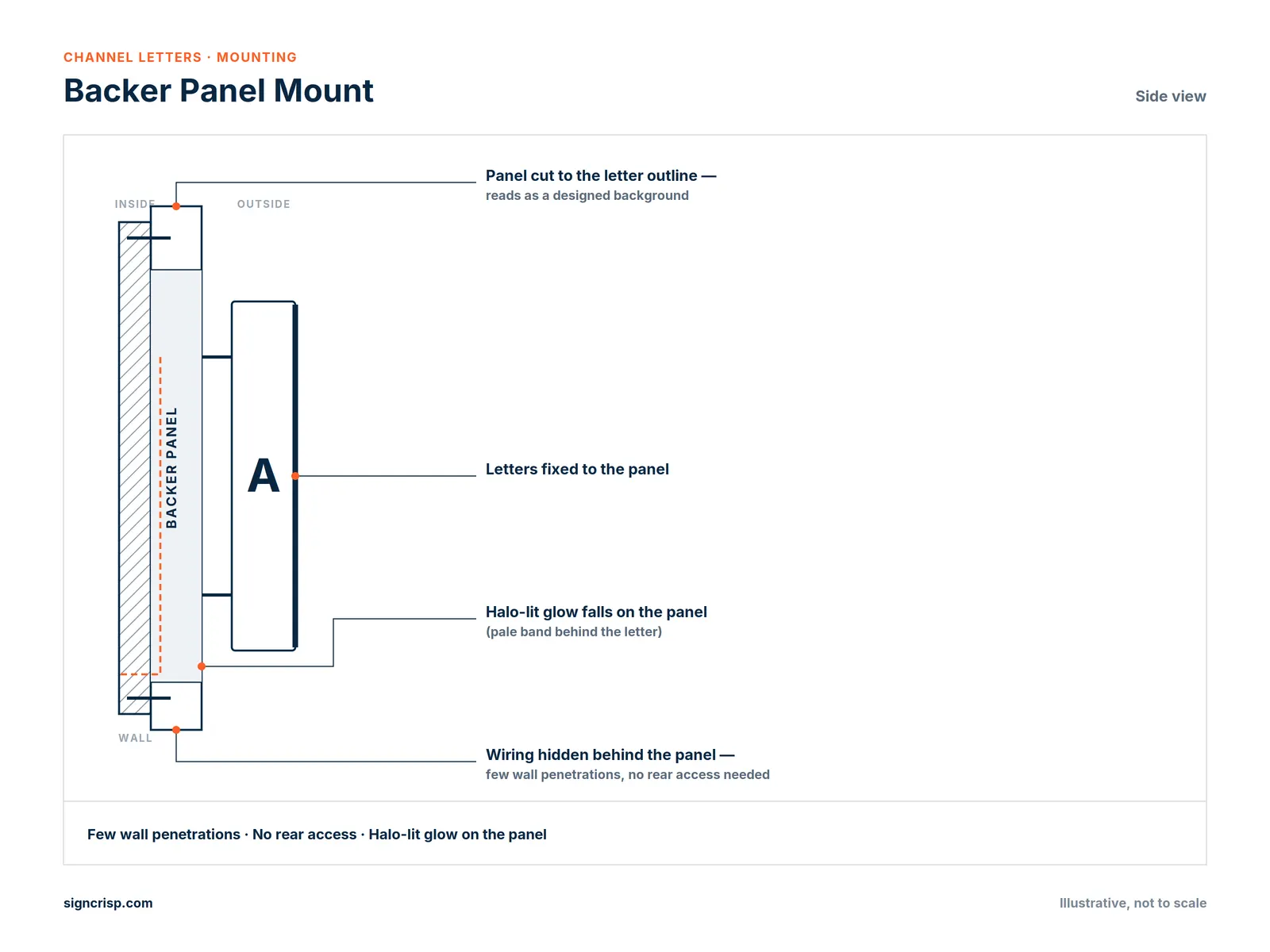
A backer panel is a custom-cut aluminum panel mounted flat or on standoffs against the wall, with the channel letters pre-mounted onto its face. Unlike a narrow rectangular raceway, a backer panel can be contoured to your logo’s outline or sized as a clean architectural plaque.
Discover products
 Custom Vinyl BannersCustomize
 Custom Feather FlagsCustomize
 Custom Rectangle Flag with Pole & Water Base – 23.6" × 63"Customize
 Custom Retractable Banner Stand – Silver Aluminum Roll-UpCustomize
Like a raceway, a hollow or deep-pan backer panel conceals wiring and reduces building penetrations. Unlike a raceway, its broad surface provides a uniform canvas for halo-lit channel letters to glow against—making it the go-to solution when a tenant wants reverse-lit letters on a dark brick wall or under a strict landlord hole-count limit.
5. Fabrication checklist before you order
Review these eight items with your installer and landlord before releasing your sign to production:
| Check | What to confirm | Why it matters |
|---|---|---|
| Wall material & condition | Brick, stone, tile, stucco, metal siding, or glass? | Determines anchor type and whether direct drilling is viable |
| Written landlord criteria | Raceway required or prohibited? Max projection? Paint specs? | Verbal approval is risky; build strictly to written lease rules |
| Lighting style | Front-lit, halo-lit (reverse-lit), or combination? | Halo-lit requires direct stud mounting or a full backer panel |
| Wiring & transformer location | Inside raceway, behind the exterior wall, or inside a pan panel? | Dictates enclosure depth and weatherproofing details |
| Rear wall access | Can an electrician reach behind the wall today and in 3 years? | Direct mounting requires rear access for wiring and maintenance |
| Permits & electrical code | Local sign permit filed? Licensed electrician scheduled? | US jurisdictions typically require NEC Article 600 / UL 48 compliance |
| Service plan | How will a technician access the power supply if needed? | Front-accessible raceways avoid tearing into finished interior drywall |
| End-of-lease make-good | How much facade patching is required when moving out? | Raceways leave 4–6 anchor holes instead of 40+ stud holes |
While a raceway adds aluminum fabrication at the factory, it often reduces on-site electrician and installer hours because only one primary power feed penetrates the wall. Direct mounting costs less to fabricate per letter, but requires more labor on site to drill, seal, and wire each character individually. For complete sign budgeting, see SignCrisp’s Channel Letter Cost Guide.
6. What to send SignCrisp with your brief
SignCrisp manufactures every channel letter sign in-house at our Guangzhou factory, and our engineering team reviews project inquiries within 12 hours. To receive an accurate shop drawing and quote, include:
- Overall width and letter heights (finished wall dimensions, plus your vector logo file).
- Desired return depth (how far the letters project from the wall, plus standoff height for halo-lit designs).
- Lighting style (front-lit, halo-lit, or combo) and wall color/texture photos.
- Straight-on facade photo with a reference measurement (such as a doorway or window width).
- Written landlord sign criteria (if your plaza or building management enforces specific mounting rules).
- Preferred mounting method (raceway, direct stud mount, or backer panel).
7. FAQ
Can halo-lit letters go on a raceway? Not effectively. Halo-lit letters project light onto the surface behind each letter, and a narrow raceway box interrupts that glow. If you cannot drill individual holes for direct mounting, order a custom backer panel instead—it hides the wiring while providing a smooth surface for the halo effect.
Does a raceway cost more than direct mount? A raceway adds modest factory fabrication cost for the painted aluminum enclosure, but it frequently lowers your total installed cost by cutting on-site drilling and electrical hookup time. Request an itemized quote from SignCrisp to compare both mounting options for your exact letter specification.
Which mount needs fewer holes in the wall? A raceway or backer panel requires the fewest penetrations—typically a handful of structural bolts and a single electrical pass-through. Direct mounting requires multiple drilled stud holes plus a wire pass-through for every individual character.
Who handles permits and final electrical hookup? The business owner or local sign installer handles municipal sign permits, and a licensed electrician must complete the final primary electrical hookup in accordance with local codes. SignCrisp supplies the pre-wired LED letters, transformers, full-scale 1:1 mounting template, and agreed mounting hardware.
8. Send your brief to SignCrisp
Lock in the right mounting method before fabrication starts. Email your dimensions, facade photos, and landlord criteria to hello@signcrisp.com, chat with our engineering team on WhatsApp at +852 6995 1502, or explore our Custom Channel Letters and Contact pages to start your free digital proof.